

What is the biggest barrier to buying an apartment in Poland today?
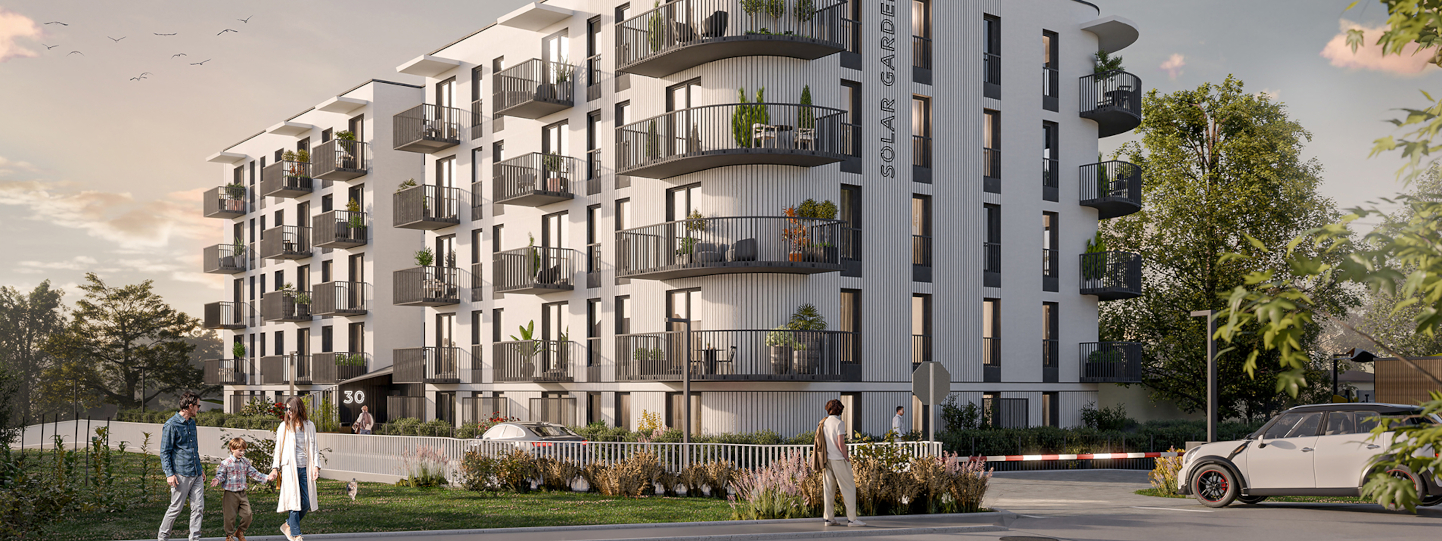
The dompress.pl website conducted a survey among Poland's largest developers to find out what is currently hindering buyers from purchasing their own homes, what factors influence demand growth, and whether companies expect sales to increase in 2026. Despite optimistic forecasts related to falling interest rates and rising lending volumes, experts point to a whole range of issues — from psychological to regulatory.
Financial barriers: interest rates and down payments
Although most developers note an improvement in mortgage availability, the cost of credit remains a significant obstacle.
Tomasz Kaleta (Develia): Although access to financing has improved, the level of interest rates still limits the purchasing power of some clients. Further rate cuts are needed to strengthen demand.
Zbigniew Juroszek (Atal): Lower rates have reduced the cost of loans. Under favorable conditions, we can expect them to fall further to 2–3%. This could revive not only demand for housing upgrades but also investment purchases, as alternative assets (stocks) are at their peaks.
Andrzej Swoboda (Grupa CTE): Overall financial affordability remains the biggest barrier. The problem is not only prices but also the high cost of loan servicing and the need to accumulate a significant down payment (in large cities — hundreds of thousands of zlotys).
Psychology and uncertainty
Experts cite buyer uncertainty and expectations of government support as factors just as important as money.
Kamil Rutkowski (Rutkowski Group): External factors, especially political and economic uncertainty, significantly impact sales, causing clients to delay long-term commitments. The lack of stable government support programs leads many to wait for new government solutions.
Monika Kudełko (Activ Investment): Although access to credit has ceased to be the main barrier, sales are held back by client doubts and expectations of new subsidy programs. Decisions on long-term commitments are made very cautiously due to the ratio of prices to income and rising living costs.
Anita Makowska (Archicom): Today's main barriers are more psychological and structural in nature. The high price base forces buyers to be selective. With record supply (over 60,000 units), the urgency has disappeared: buyers compare options and wait for price corrections.
Supply and regulatory issues
Developers also highlight challenges related to doing business that ultimately affect the final price for the buyer.
Renata Mc Cabe-Kudla (Grupo Lar Polska): The market in Warsaw is balanced: supply is close to average annual demand. We expect further rate cuts to increase the purchasing power of first-time buyers.
Damian Tomasik (Alter Investment): The problem that has remained unchanged for years is the unstable and complex legal environment. Project preparation takes 2–5 years, and during this time laws can change several times. This leads to increased risks, project delays, and higher costs, which are ultimately passed on to apartment prices.
Witold Kikolski (MS Waryński Development): High land prices, rising project implementation costs, and administrative requirements directly affect apartment price levels. Simplifying administrative processes and increasing the availability of land for residential development could serve as a stimulus for the market.
Outlook for 2026: stabilization and cautious optimism
Most developers surveyed expect moderate sales growth in 2026, but do not forecast a sharp boom comparable to periods when subsidy programs were in effect.
Marcin Michalec (Okam Capital): Poles' purchasing power is growing due to rising wages, but sometimes fails to keep up with prices. Uncertainty surrounding the government's housing policy and rising living costs have a negative impact. In 2026, we forecast moderate sales growth, fueled by pent-up demand and price stabilization.
Andrzej Gutowski (Ronson Development): We see lending growth, but a significant portion of loans are being used to refinance existing obligations rather than for new purchases. Supply still exceeds real demand. We plan a slight increase in sales compared to last year.
Joanna Chojecka (Grupa Robyg): A 20% increase in lending is forecast, so access to financing is ceasing to be the main barrier. However, limited supply in attractive locations and regulatory uncertainty remain constraining factors. The market is increasingly relying on real, organic demand driven by housing needs.
The overall conclusion from the survey of leading development company executives is that sustainable market growth requires a combination of factors: further rate cuts, stable and predictable legislation, and adaptation of developer offerings to the real capabilities of buyers. The market is entering a phase of stabilization and "more mature optimism," where the key role is played by organic demand for housing improvements, rather than speculative investments or short-term government support programs.

Need Support?
© 2006-2026 Rielt.org.