
Bodrum in April 2026: Is now a good time to buy real estate?
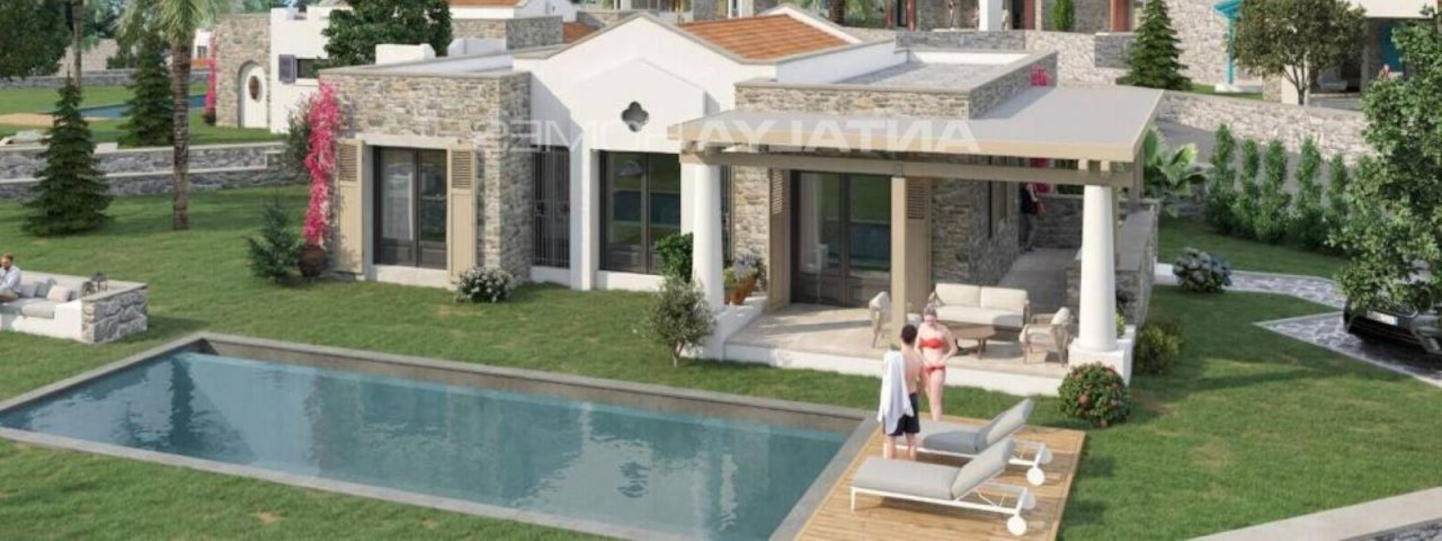
If you're currently wondering whether to buy a home in Bodrum, you're not alone. The question "buy or wait" concerns almost everyone who looks at local villas and apartments. And instead of general phrases, let's just look at the real numbers and what's happening on the market right now.
We'll break down current prices, figure out whether the market is overheated, and try to look 12 months ahead.
Do prices look too high?
At the beginning of 2026, real estate in Bodrum in Turkish lira does seem expensive: the average asking price is around 45,000 TRY per square meter. But the answer to the question "is it too much" depends on what you compare it to.
If measured against local salaries — yes, prices are very high. But if adjusted for inflation — the concern is not as severe.
Here's what's really noticeable in the listings: apartments in non-prime areas (for example, in Konacık or inland Ortakent) stay on the market longer, and there's more active negotiation on them. This is a clear sign that the segment dependent on mortgage buyers is feeling uncomfortable. On the other hand, premium villas and sea-view apartments in Yalıkavak or Türkbükü continue to sell with almost no discounts — there, demand is supported by cash buyers and foreign purchasers.
Should you expect prices to drop?
To be honest, the likelihood of a quick and sharp crash in Bodrum is low. But a much more realistic scenario for the next 12 months is a slow decline in real terms, i.e., adjusted for inflation.
What might that look like? In nominal lira, prices will most likely stay flat or even rise slightly. But when you factor in inflation, the real value could fall by 5–15%. And the main pressure will fall precisely on ordinary apartments and those new developments where supply clearly exceeds demand.
The key factor that could push prices into a more noticeable decline is credit conditions. If mortgages remain tight or become even tighter, buyers who need credit will simply be squeezed out of the market. Right now, Turkey's central bank has started cutting rates, but lending is still quite conservative. A sudden crisis is not expected, but prolonged pressure on the mid-market segment is quite possible.
Or could prices jump again?
That possibility also exists, and I would rate it as medium. All the ingredients for a new surge in Bodrum are there, but they haven't yet come together into a complete picture.
If conditions align favorably, nominal prices in lira could rise by 10–20% over the next 12 months. This is especially true for premium locations — Yalıkavak, Bitez, Gümüşlük — where supply is limited and tourist demand remains strong.
The single most powerful trigger for a new leap is real relief in mortgage rates. As soon as credit becomes more accessible, first-time buyers will return to the market, and demand for entry-level villas and apartments will noticeably pick up.
Is it a buyer's or seller's market?
Bodrum currently has a two-speed market. In the premium segment (villas and sea-view apartments in Yalıkavak, Türkbükü, Torba), sellers still rule. But in the standard apartment segment in Konacık, Mumcular, or inland areas, the situation is changing — buyers have more power, and negotiation is quite appropriate.
We don't have official inventory data specifically for Bodrum, but the general logic is simple: in a tight credit environment, properties aimed at mortgage buyers stay on the market longer. This typically means 6+ months of supply and, accordingly, a more buyer-friendly dynamic.
In the mid-market apartment segment, there is noticeably more price flexibility, and listings stay up longer. Sellers are losing leverage, and buyers can push harder for discounts.
Are prices inflated or fair?
On one hand, compared to local incomes, housing in Bodrum is certainly expensive. But this has always been a prestige market and a second-home market. If you look at the short-term rental potential for well-located properties, the picture looks much more reasonable.
The price-to-rent ratio varies widely. Long-term rental yields about 4–6% gross per year — which is lower than you'd expect in a balanced market. But short-term rentals in good locations (such as Bitez or Ortakent-Yahşi) can yield 6–10% per year.
The price-to-income ratio is very high — the average working person in Bodrum simply cannot buy a home here. That's why the market depends so heavily on buyers from Istanbul, wealthy Turkish expats, and foreign purchasers.
Looking at long-term dynamics, nominal prices are now clearly higher than before 2020. But adjusted for inflation and currency changes, the "bubble" no longer seems so obvious. Over the past 12 months, prices in Bodrum have risen, but noticeably slower than in 2022 or 2023. The market is cooling toward a more sustainable rhythm rather than accelerating into dangerous territory.
What local changes could affect prices?
There are no major mega-projects that would transform the market overnight in Bodrum right now. But the municipality is systematically working on infrastructure improvements: roads, utilities, public spaces. Collectively, this improves quality of life, especially in year-round residential areas — for example, in Konacık and Ortakent.
As for zoning and building regulations — no major reforms are underway, but existing height restrictions and coastal protection zones seriously limit new construction. For premium locations, this is structural price support: developers simply cannot add high-rise density in the most desirable areas by the sea.
Regarding foreign buyers — no major restrictions are being introduced for now. The main factor here is the direction of mortgage rates, which remain high but have begun to ease slightly after the central bank's rate cuts at the end of 2025. The most likely development is continued monitoring of citizenship-by-investment thresholds, but without outright bans or new taxes.
What about renting? Will it be easy to find tenants?
Rental demand in Bodrum remains strong thanks to robust tourism and a growing number of remote workers and lifestyle relocators. At the same time, new rental supply is limited by building regulations.
The best signal of demand is short-term rentals. According to AirDNA, average occupancy is around 45%, and the average daily rate is nearly $300. The numbers speak for themselves: interest from holidaymakers is stable.
In the best areas (Bitez, Türkbükü, the marina area in Yalıkavak), rentals move very quickly — during the season, almost instantly. In weaker locations, properties may sit longer. The main reason for this speed is the combination of a shortage of quality year-round housing and strong seasonal demand.
It's important to understand seasonality: in summer, vacancy in top areas is minimal; in winter, it's naturally higher, as the market is heavily tied to tourists. But in year-round residential areas (Konacık, central Bodrum transport corridors), occupancy is more stable.
A practical marker that the best rental areas are tightening is when owners can raise summer rates without losing bookings. And that's exactly what's happening now in Bitez and Ortakent-Yahşi for properties with pools, beach proximity, and professional management.
Am I buying into a tightening market?
There is no official inventory statistics specifically for Bodrum, but logic suggests that in a tight credit environment, many listings stay up longer while sellers "test the market." As a result, total listing counts may even rise, even as genuine buying activity slows.
Sales velocity is mixed right now. The best properties (turnkey apartments in good complexes, premium villas with views) sell faster than average inventory. Compared to the boom years of 2021–2023, time on market has likely increased — especially in the mid-market segment. Currently, exposure time for top properties in season is about 2–4 months, which is perfectly normal for a resort market. For less attractive lots — 6 months or longer.
New construction is structurally limited by coastal zoning rules and protected areas. Even if Turkey overall issues many construction permits, the most desirable areas of Bodrum simply cannot add high-rise density. That's the main bottleneck.
Will it be easy to sell later?
Resale liquidity is currently strong for the right property types: modern apartments in reputable complexes, solid villas with sea views and clean legal status. A well-priced premium property in active season can find a buyer in 2–4 months — that's healthy for a resort market.
I would rate the likelihood of exiting with a profit as medium — provided you buy selectively and plan to hold for at least 5–7 years. A 5-year horizon is most often the minimum that allows you to cover transaction costs and inflation. The full round-trip cycle of buying and selling in Bodrum typically costs 8–12% of the property's value.
And the main advice that truly increases your chances of profit: buy below replacement cost or choose properties with unique, hard-to-replicate characteristics — direct sea views, walking distance to the beach, proven short-term rental income. In Bodrum, this still works.

Need Support?
© 2006-2026 Rielt.org.